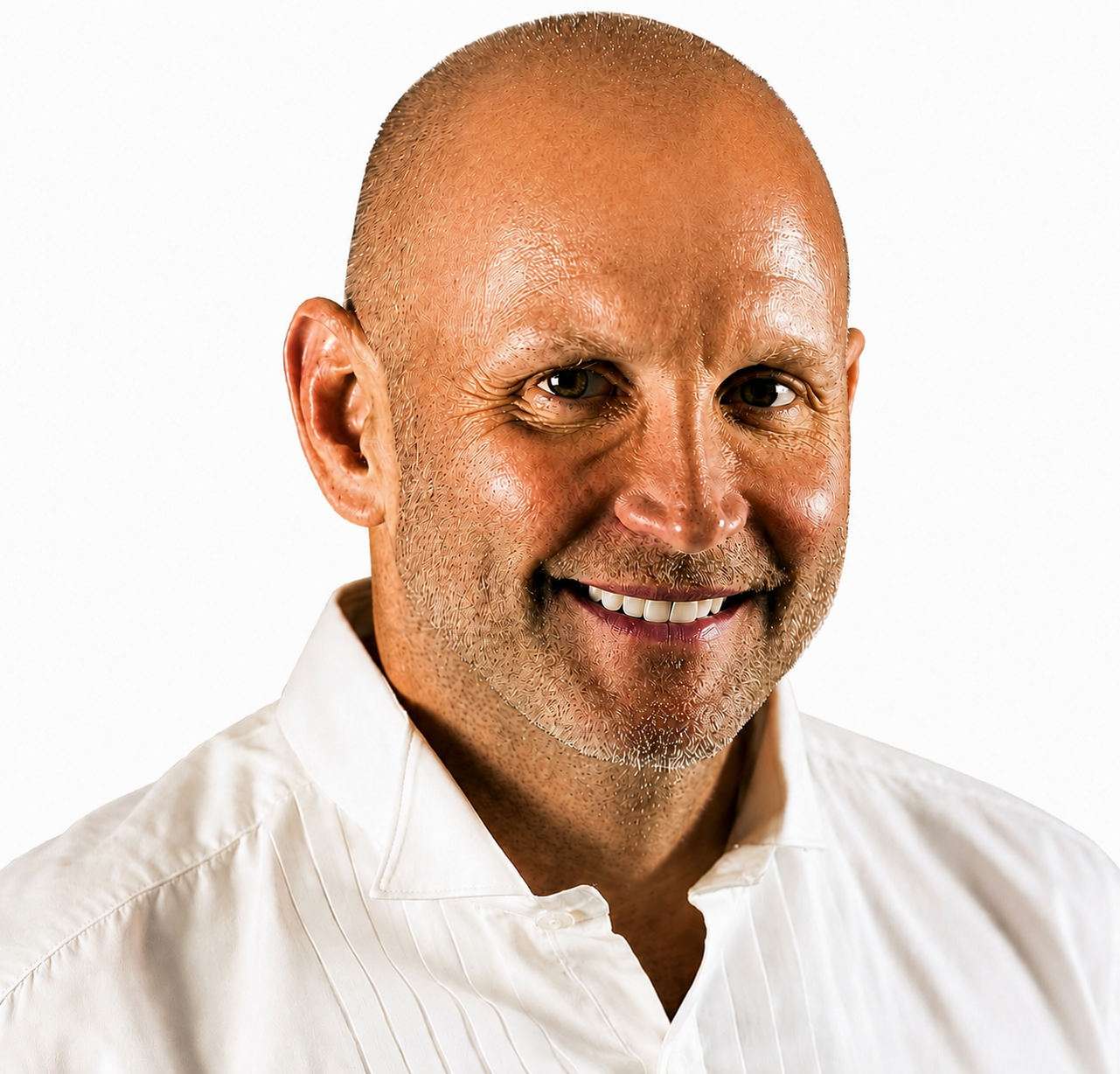
Steven M. Muskal, Ph.D.
AI Pioneer | Drug Discovery Expert | Creative Innovator | Serial Inventor
CEO of Eidogen-Sertanty with over 40 years at the intersection of AI, chemistry, biology, and drug discovery. Host of the Renaissance Circle podcast. Builder of AI-Steve, Food Health Scan, and AI-Dad.


 Be a Guest
Articles
Essays, podcast episodes, and conversations from Renaissance Circle - Dr. Steven Muskal's Substack. AI, health, drug discovery, music, and the art of feeling good.
The Moat Is a Puddle
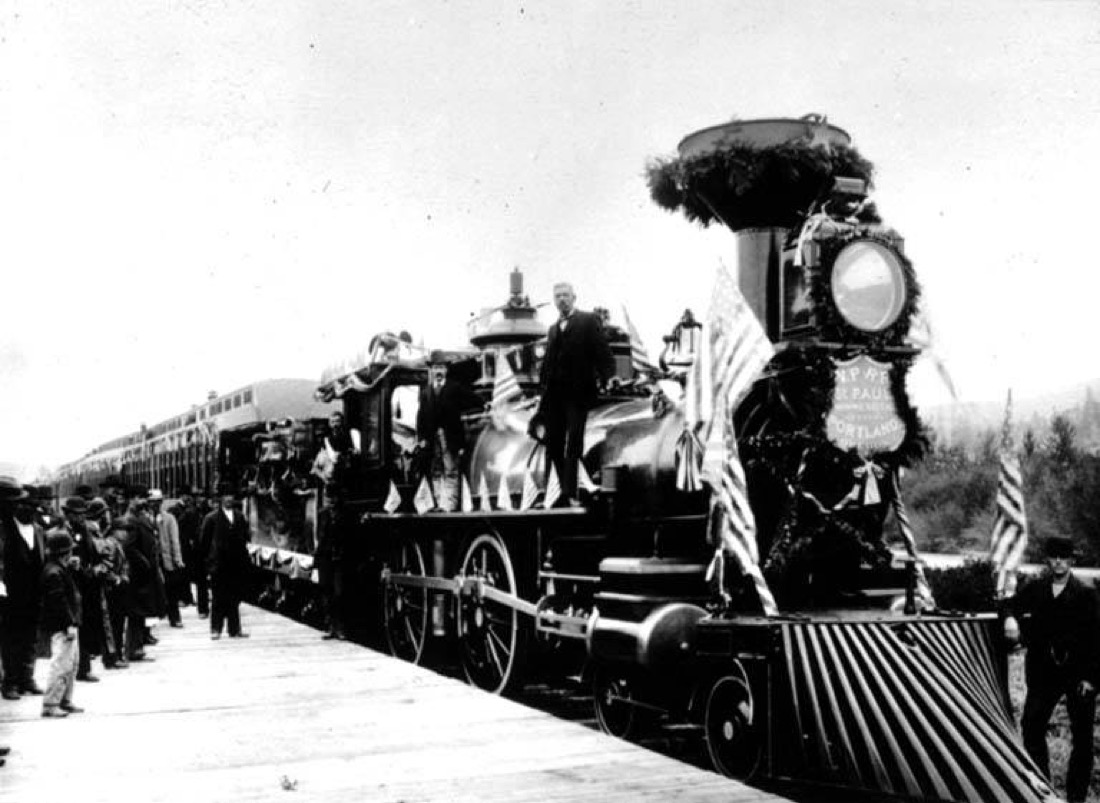
Seven companies now carry roughly a third of the S&P 500, with the Magnificent Seven peaking at 35 percent in June 2026 against prior highs near 26 percent in the 1980 energy boom and at the dot-com top. The piece's frame comes from Carlota Perez: every bubble runs two engines, a technological one and a financial one, and a study of 51 major innovations from 1825 to 2000 found equity bubbles in 73 percent of them. Which engine dominates tells you what breaks. When finance dominates, as in 2008, the leftovers are loan books that reprice; when technology dominates, as in 2000, the leftovers are physical capacity someone else inherits cheap. Only twice have both engines run at full throttle: 1873, when Jay Cooke financed the Northern Pacific on bond sales years ahead of the freight, and now. Cooke was not a fraud; he was a believer on a schedule the traffic could not meet, his firm's failure closed the New York Stock Exchange for ten days, and the line was completed in 1883 by other people after his investors were wiped out. Swap the Northern Pacific for gigawatt data centers and the bond syndicate for off-balance-sheet vehicles and circular chip-and-cloud agreements, and the structural bet is identical.
The asset at the center is the weakness, and Steve speaks to it from forty years of building models: a large language model is a very large array of numbers, billions of floating-point weights fitted by gradient descent, with no patent-grade secret inside the matrix. Chinese labs, DeepSeek most visibly, have distilled frontier models at a small fraction of the training cost and published the weights; four-bit quantization fits a 70 billion parameter model in roughly 40 GB on a workstation under a desk; Qwen derivatives were over 40 percent of new language model variants on Hugging Face by August 2025. If a half-trillion-dollar asset can be functionally reproduced by people who could not buy your chips, and then given away, it is not a moat. At best it is a puddle. The steel parallel makes the mechanism explicit, except the marginal cost of the next copy is zero: a government that wants to compress American model margins does not need an export terminal, it needs one upload. And capability is no longer the constraint. The last real jump in usefulness came from inference-time compute rather than a larger base model, a quiet admission that pretraining scaling has hit diminishing returns, while a well-engineered mid-sized open model now beats what the frontier could do eighteen months ago on the tasks a business actually cares about.
The harder ceiling gets less attention than compute: Epoch AI puts the effective stock of quality public human text near 300 trillion tokens and projects training consumes it between 2026 and 2032. The corpus has been read, access is tightening, and new writing cannot be manufactured by the people who need it. So the durable moat sits where nobody is pricing it: proprietary content, the corpus nobody else holds and that keeps growing, already fetching reported terms like News Corp's $250 million-plus OpenAI agreement and Reddit's $203 million in licensing, with the move from subscription to perpetual license a 10 to 100 fold step up for the contributor, and the asset regenerating every training cycle. A chemistry aside carries the theme, ATP for energy and GTP for information, one oxygen apart and never confused by the cell. The close is two lessons pointing the same way: hold more dry powder than is comfortable, because the thermodynamics of the correction are settled even if the kinetics are not, and keep writing, because original content is the one part of the stack nobody can distill out of someone else's model.
AI BubbleLLM MoatOpen WeightsDistillationMarket HistoryData CentersContent LicensingInvesting
Your Dexcom Is Live. Apple Health and Health Connect Are Three Hours Behind.
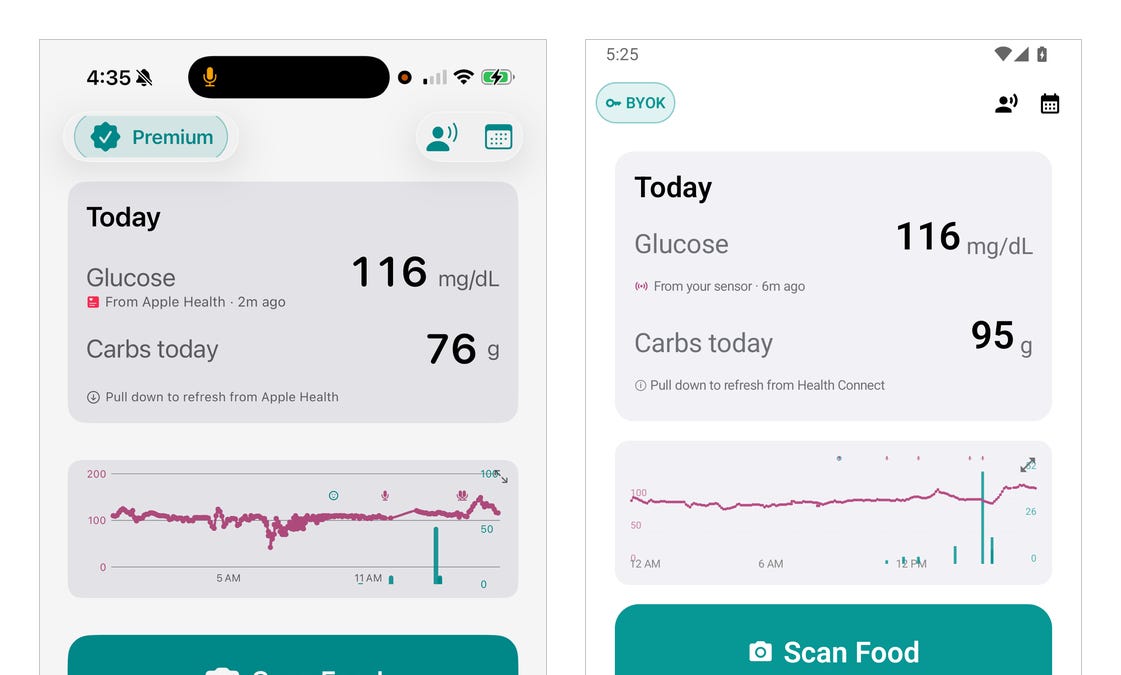
If you wear a Dexcom Stelo, G7, or ONE+ and your glucose chart in a third-party app runs hours behind the clock on the wall, nothing is broken. The sensor samples interstitial glucose about every five minutes and delivers it to the Dexcom app exactly as advertised. The delay sits one layer downstream, where the Dexcom app exports to Apple Health on iPhone and Health Connect on Android, and it is held back on purpose: Dexcom's own support pages state the three-hour delay in one sentence each, and none of them says why. Steve's reading is that it is a regulatory line rather than a technical one. The Dexcom app is the cleared medical display, and a three-hour hold guarantees that no app downstream of the general health stores can be mistaken for a real-time glucose monitor. The cost lands on anyone trying to connect a meal to the glucose response it caused: lunch at noon arrives in Apple Health smeared across a window wide enough to blame the wrong meal entirely. After 35-plus years of building software at the intersection of biology and computation, Steve calls it what it is, a timestamp problem, which makes it a solvable one.
The fix is a beta called Direct Sensor Reading in Food Health TxD, the diabetes companion to Food Health AI: Scan & Score, and the piece is specific about whose shoulders it stands on. On iPhone it is built on the engine of xDrip4iOS, the community CGM app, which joins the sensor's existing Bluetooth session in Coexistence mode: the Dexcom app keeps owning the sensor, no pairing code, nothing changes, and TxD writes each reading to Apple Health the moment it arrives, with backfill. On Android it is built on xDrip+ from the Nightscout Foundation, reading each value off the Dexcom app's notification and writing it to Health Connect, with an optional direct Bluetooth bridge for anyone who wants the listener to own the sensor outright. Sensor data you already paid for reaches your chart in minutes instead of hours, and the caveats are stated as plainly as the feature: the beta is off by default, TxD never pairs with or takes over the sensor, the Dexcom app keeps the medical alarms, nothing in the app is a glucose estimate or prediction, and it is not a medical device.
Minutes matter because of what they unlock. No public repository anywhere pairs raw voice or face captures with glucose values, so the only labeled data will be first-party, collected by the person whose glucose it is. With readings arriving in near real time, TxD labels each voice or face check-in with the nearest sensor reading within 15 minutes, reduces every clip to nine acoustic features and every photo to ten, and runs the statistics on the device: a day-block permutation test, leave-one-day-out ridge regression, and a three-band random forest, with the verdict shown plainly even when it is no signal yet. Two weeks of Steve's own data close the piece. The food scans carried the clearest signal: every meal under 30 grams of carbohydrate kept his rise under 30 mg/dL, a model on the scan's nutrients predicted rise sizes 28 percent better than his average, and the biggest spiker was a chocolate nut bar rather than the biggest meal. Cheek redness tracked glucose at a correlation of 0.51, and voice pitch showed a small positive tendency that cannot yet be separated from whatever else changed between days, which is exactly why the app keeps collecting.
CGMDexcomApple HealthHealth ConnectOpen SourceVoice BiomarkersN-of-1 HealthFood Health TxD
Revisiting Old Work
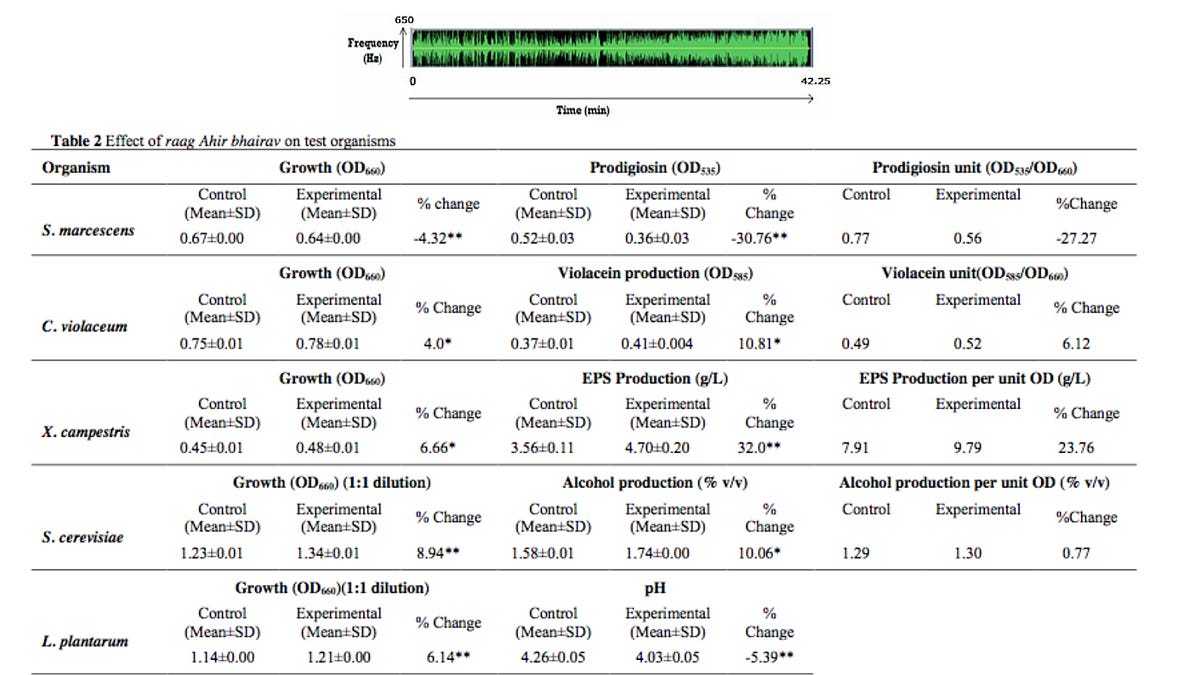
Science is supposed to be hypothesis testing and validation, and the field quietly stopped applying that to its own back catalog. You publish, the claim enters the record, and it sits there untested against anything larger than the data you had at the time. Steve spent a few months going back through twenty five years of his own work, some of it from 1998, and rebuilding it to find out whether it still holds. Five preprints later the answer is that most of it does, and the reason a twenty five year old hypothesis can be retested at all is that the public data is now one to two orders of magnitude larger. The loop he runs today inverts the old one: resurrect the code, revalidate on the bigger data, stand up a free working website, then post the preprint and let the formal record catch up.
The revisits run through four decades of problems. The 1998 human intestinal absorption model turned out to have ridden a fortunate train and test split, yet its six descriptors still carry the signal on a set nine times larger, and the deployed model at predicthia.ai calls the right side of the 30 percent threshold 92.64 percent of the time. The 2003 toxicity method, where a compound's structural neighbors vote, lost its proprietary reference set and has been rebuilt on 11,989 public rat oral LD50 values, then extended untouched to 28 more endpoints. A new signal came with it: a compound whose structural matches reach no protein family inhibits CYP3A4 2.5 percent of the time, and one reaching sixteen or more families does so 51.2 percent of the time, a pattern that then held on 2,335 compounds measured later by the OpenADMET consortium. PharmCast removes conformer generation, which was 2.82 of the 2.86 seconds a pharmacophore fingerprint used to cost. ReverseScreen.ai puts retrieval in front of docking and hands it 35 protein sites instead of 28,579. The comparator models ask which of two, and need no structure, no pocket and no pose.
Three things tie them together, none of them planned. Ask which, not how much, because decisions are comparisons and the field spent decades predicting absolute quantities nobody uses. The expensive step is usually optional, because precision a decision never spends is cost rather than rigor. And an old question is usually underpowered rather than closed, since what expired was the tooling and the sample size, not the idea. The same turned out to be true of the people: every revisit put Steve back in touch with a co-author he had not worked with in years, and everyone said yes. The piece closes on the quieter threads, sound and the microbiome, a vitamin D question he wrote down ten years ago and answered in about a third of a second, and why both of his food apps listen.
ReproducibilityOpen SciencePreprintsADMEToxicityPharmacophoresReverse ScreeningAI Tools
Why I Started Talking to My Computer Instead of Typing at It
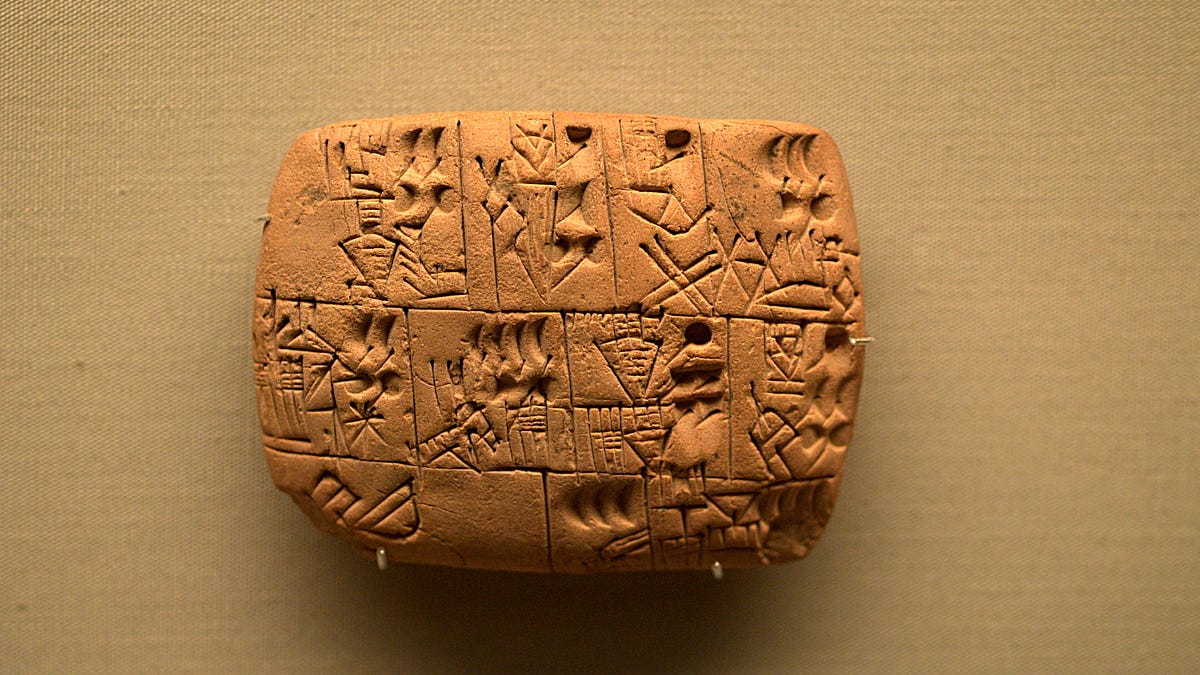
Reading is a 5,000-year-old hack. Speaking is a 200,000-year-old operating system. Before any human could read a word, every human could tell a story, and anyone within earshot could receive it. Spoken language is old enough to be load-bearing in our neurology; writing is a tool bolted on afterward that repurposes visual circuits built for recognizing objects, which is why children pick up speech on their own and reading only with instruction. The printing press, the paperback, the inbox and the feed moved information faster than a voice ever could, but none of them changed what kind of animal we are. Steve, who has built software for three decades and is not anti-text, argues we have confused the accelerant for the engine.
From there the essay works through the consequences. Literacy has always been a gate; voice is the leveler. Reading before bed demands tight saccadic eye control at the moment the body is trying to let go, while listening asks nothing of the eyes. Typing is a very small movement for a very big brain, where oral storytelling recruits the whole body and walking measurably improves creative output. A tour of ten oral traditions, from West African griots to shadow puppetry, shows how much information has survived for centuries without a page. The toolkit for going back is practical: local dictation with Rambleproof, cloud dictation with Wispr Flow, and a cloned voice from ElevenLabs that reads back to him.
The last section treats his voice as a lab sample. Jitter, shimmer, harmonics-to-noise ratio and cepstral peak prominence track physiology, and recent studies in Diabetes Care, the Journal of Voice and IEEE JBHI link them to hypoglycemia, gestational diabetes and type 2 diabetes. Steve now records every dictation session as a longitudinal dataset and plans to correlate the voice features with continuous glucose readings. The close is a return trip, not a retreat: keep everything literacy earned, and route it back through the channel we were built for.
VoiceDictationOral TraditionNeuroscienceVoice BiomarkersDiabetesAI Tools
What Are We Going to Do With All This Intelligence?
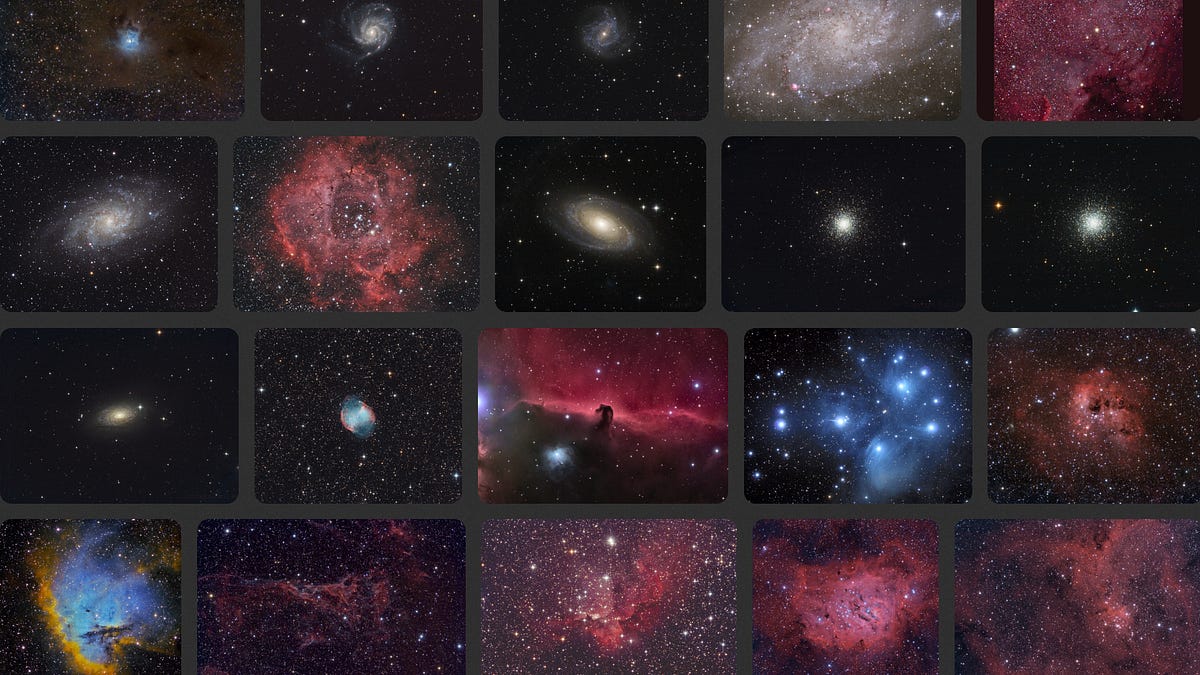
Steve met Tim Lewis in an observatory, where people gradually headed out and the two of them kept talking. Tim takes remarkable photographs of the night sky, plays bass to Steve's drums, and has a habit that runs through the whole conversation: once he understands something, he wants to explain it to somebody else. His path to astronomy started at eleven with library books on telescopes and a first scope so unstable it needed homemade tripod braces (and cost him a drill bit through a toe), then a long detour into music before he came back around 2000 with better tools. Looking at his images of the Pac Man and Orion nebulae, Steve's reaction was how small we are; Tim's correction was that zooming out can make our problems insignificant without making us insignificant. From there the talk moves through consciousness, Steve's comfort with not knowing, and the few seconds when a band locks in and the whole room feels different.
The middle of the conversation is about working with AI. Steve has written a lot of code and does not want to write another line; he wants to describe what he wants built, inspect what comes back, test it, and improve it, and the result has been more projects and more old questions reopened. The concrete example is a human intestinal absorption model he built at Affymax a quarter century ago from 86 hand-curated compounds. Revisited with approximately 780 data points, the original result reproduced, but trying many different divisions of training and test data showed the original division had been one of the favorable ones, and that broader picture goes into the new report. The same approach applies to consortium voting for toxicity prediction: build the site, make the model available (cHIA at predicthia.ai and ToxPred), then write the paper around work people can already use, while pressing the pharmaceutical industry to share far more of the data it already holds.
The close is about who benefits. Tim describes personal growth as an expanding sphere of care, and Steve connects it to a change since his father passed away: more of his time and money directed toward other people, with no sense of deprivation. Tim keeps returning to incentives, from an automated billing system with no human to reach to the idea of measuring a company partly by how much it improves people's lives. Neither claims to have the mechanism. What they agree on is the practical part: share what you understand, put the tools out there, and see who can use them.
Renaissance CircleAI ToolsAstronomyReproducibilityADMEOpen ScienceMusic
From Displacement to Reconnection
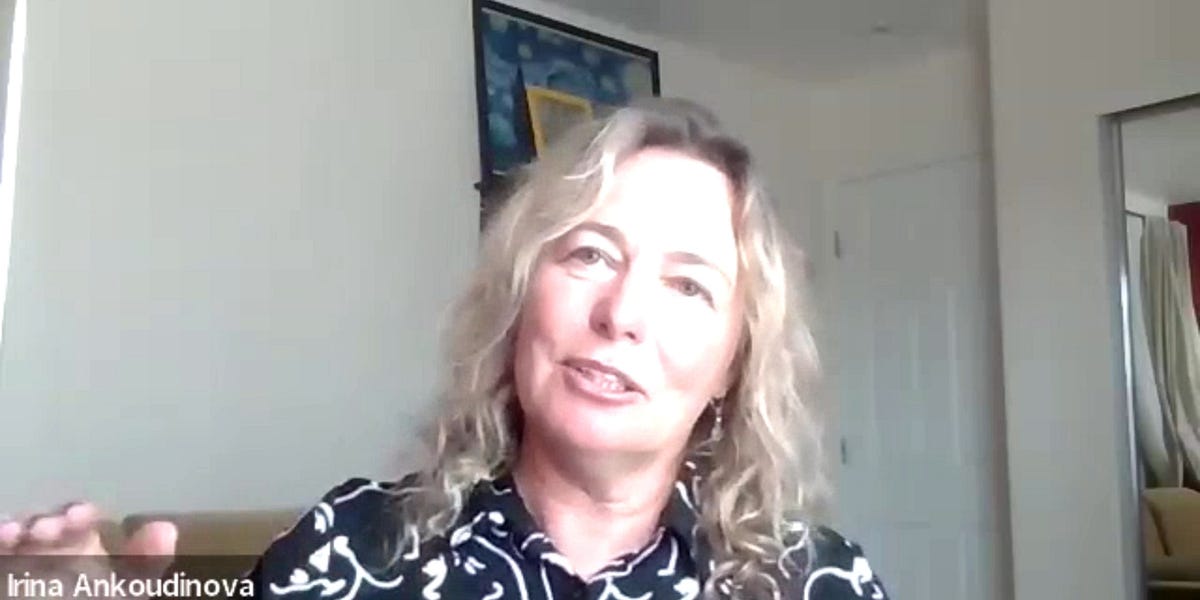
Irina Ankoudinova's own technology kept making her obsolete. Now she wants to bring Ukraine's land back, and she needs about five people. The first half of the conversation is a career with a shape: every time Steve asked what happened next, the answer was a new technology arriving and making her current one unnecessary. Zinc fingers and TALENs, then CRISPR. Sanger sequencing, then massively parallel sequencing. Structural genomics, which quietly lost its funding wave. Her path runs from plant biology into Sung-Hou Kim's lab at UC Berkeley, where she was handed crystallization, the least deterministic step in all of structural biology, then on through genome editing at Sangamo, next-generation sequencing, and DNA-encoded library screening. She got hit early every time because she worked at the edge, where the hits land first, and the lesson she pulled out of it travels well past biology: do not get attached to the technology, get attached to the questions you are trying to answer.
The second half is Ukraine, where her mother's family is from, and it has the same shape at a scale that makes the first half look small. Farmland shelled and mined out of being farmland, a language turned into a border, families scattered across a continent. What she wants next is a vocation rather than a job: recovering war-damaged soil the biological way, matching plant species and microbiomes to a specific contamination and giving a plot one season to come back, rather than solving it with heavy industry. Maybe not wheat. Maybe beans. Israel turned desert into farmland and countries wrecked in the Second World War brought their land back, so the precedent exists and the experience can be shared.
The last hour is method: triage damaged ground from satellite and drone imagery, find an analog landscape you are actually allowed to walk and run controlled experiments there, and generate training labels by computation or metadata rather than by hand, the same move that turned a minute of pharmacophore calculation per molecule into a fraction of a microsecond. The idea the title comes from is two-sided: a person who left and a person who stayed each posting where they are today, a mutual check-in that happens to produce a landscape data set. Nothing here is a plan. It is a scientist with a good question and no collaborators yet, and the next step is not having the answer, it is getting five people interested in the same question.
Renaissance CircleUkraineSoil ReclamationGenome EngineeringCRISPRCrystallizationAI Tools

We Are Optimizing the Wrong Objective in Biology
We Are Optimizing the Wrong Objective in Biology opens with a personal anomaly: Steve's Amazon cart registered a respiratory infection about four days before his wearables did. He uses it to ask a bigger question. Medicine has spent a generation predicting protein structure and other intermediate abstractions, but nature never optimized structure. Evolution optimizes fitness through a DNA to organism to outcome loop, and that, not structure, is the objective medicine should share.
The turn is that everyday behavioral data, our purchases, wearables, and transactions, already works as a population-scale physiological sensor network no one ever pointed at health. Five peer-reviewed studies anchor it: 47,000 Fitbits tracking CDC flu curves at correlations up to 0.97, smartwatches flagging COVID before symptoms, the DETECT study across 30,000 people, and credit-card sequences sorting a city into lifestyle groups. Google Flu Trends is included as the cautionary counterexample, because ambient data is only as good as the rigor applied to it.
The right question, then, is not what structure a protein adopts, but given everything we know about a person, which intervention improves their trajectory. It is an N-of-1 argument scaled to populations, and the population evidence is starting to catch up to one man's shopping cart.
N-of-1 HealthWearablesPopulation HealthDigital BiomarkersDrug DiscoveryAlphaFold
Anthropic Is Becoming a Drug Company. It Also Decides Who Else Gets to Be One.
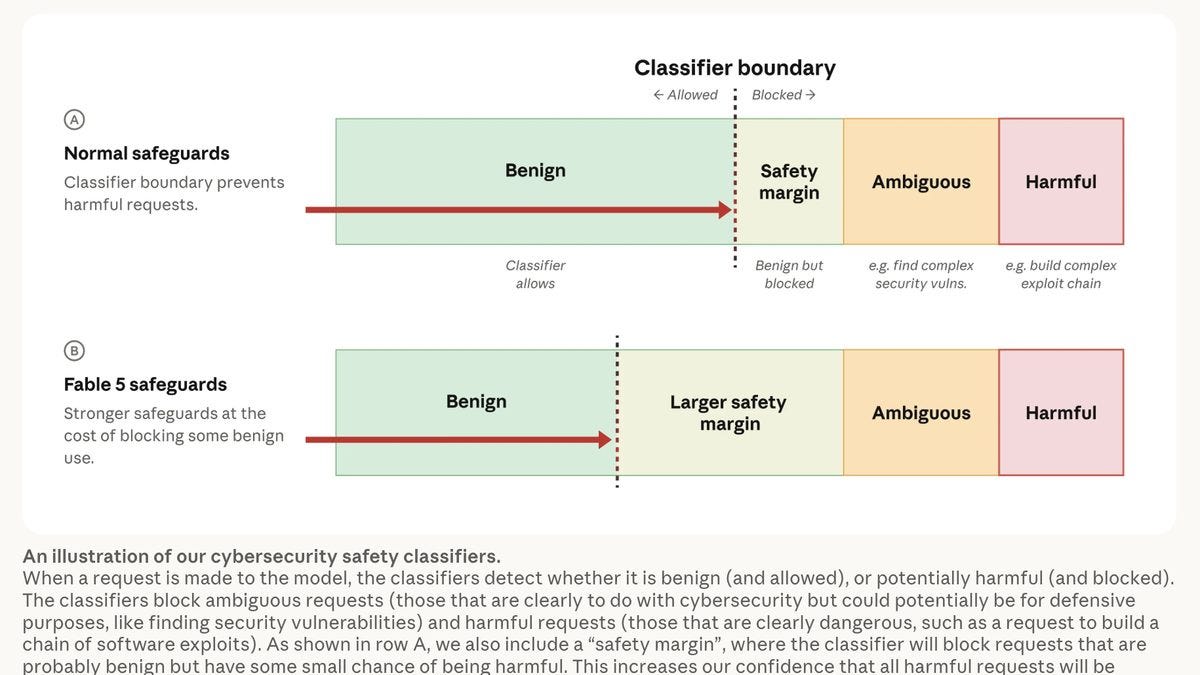
The piece opens with a dated sequence and asks the reader to take it in order. April 3, 2026: Anthropic acquires Coefficient Bio, a stealth biotech of fewer than ten people, nearly all from Genentech's Prescient Design, for roughly $400 million in stock. April 16: a collaboration with Eli Lilly, presented by Dario Amodei himself, following an earlier AbbVie partnership. May 20: a strategic agreement with Bristol Myers Squibb reported to reach more than 30,000 employees. June 9: Fable 5 ships with a routing policy that diverts, in the company's own words, the majority of biology, chemistry and life sciences queries away from the most capable model. June 30: Claude Science and in-house preclinical drug programs. August 2: reported AstraZeneca and Bristol Myers Squibb merger talks that would make Anthropic's May customer the largest drugmaker on earth. The therapeutics commitment came first, which retires the defense that the drug business is an afterthought bolted onto a fixed safety posture. In roughly fourteen months the company's own description of its safeguards moved from a very narrow set of topics to the majority of a scientific discipline, and its own published diagram labels the band it deliberately widened benign but blocked.
Steve's objection is not his own access, though the canary is personal: the flags land in his terminal several times a week on ordinary target biology and molecular mechanism work, from someone with a Berkeley Ph.D. in biophysical chemistry, four decades in computational biology and a paid enterprise relationship, and the fallback tier now carries the same intentionally broad safeguards. The real objection is the bet. More than 200 recognized cancers, an Alzheimer's label covering substantial biological heterogeneity, and over 10,000 rare diseases mostly without an approved treatment are not solved by a few large pharmaceutical companies and one AI lab's internal programs. They get solved, if they get solved, by thousands of groups attacking thousands of targets in parallel, resting on a pre-competitive commons of deposited structures, released sequences and published dead ends. Concentrating the most capable scientific reasoning behind a handful of incumbent relationships is a bet that the binding constraint in medicine is capability rather than parallelism, and Steve argues that bet is wrong in a way that costs lives rather than money. Nobody outside the company can tell whether Lilly or Bristol Myers Squibb work under the same constraints as a graduate laboratory, and that opacity, he writes, is not a side issue in the story; it is the story.
Set the ethics aside and it is still a vendor-qualification problem: availability, after two frontier models went offline worldwide for roughly eighteen days under a government directive; behavior that changes without publication, which is an audit finding whose remediation is revalidation; fallback; and the new fourth question, who else are you. Steve built the obvious architecture in July, an abstraction layer with two providers and an open-weight model in reserve, and notes the open-weight gap to the closed frontier has compressed from roughly 150 Elo points to about 30, so a filtered request now has somewhere to go. He does not want Anthropic to lose; he wants no one to be the gatekeeper, because plurality is the only appeals process the field actually has. The close is three things to publish, none of which removes a guardrail: turn the announced biology trusted-access program into a real front door with published criteria and answers in about two business days, let verified identity reach the classifier, since a system that bills a customer by name and judges them as a stranger is an unfinished architecture, and disclose the firewall, stating whether the internal therapeutic programs run against the same threshold that stops everyone else.
AnthropicAI SafetyDrug DiscoveryPharmaGatekeepingOpen-Weight ModelsVendor RiskAI Policy
AI for Everyone
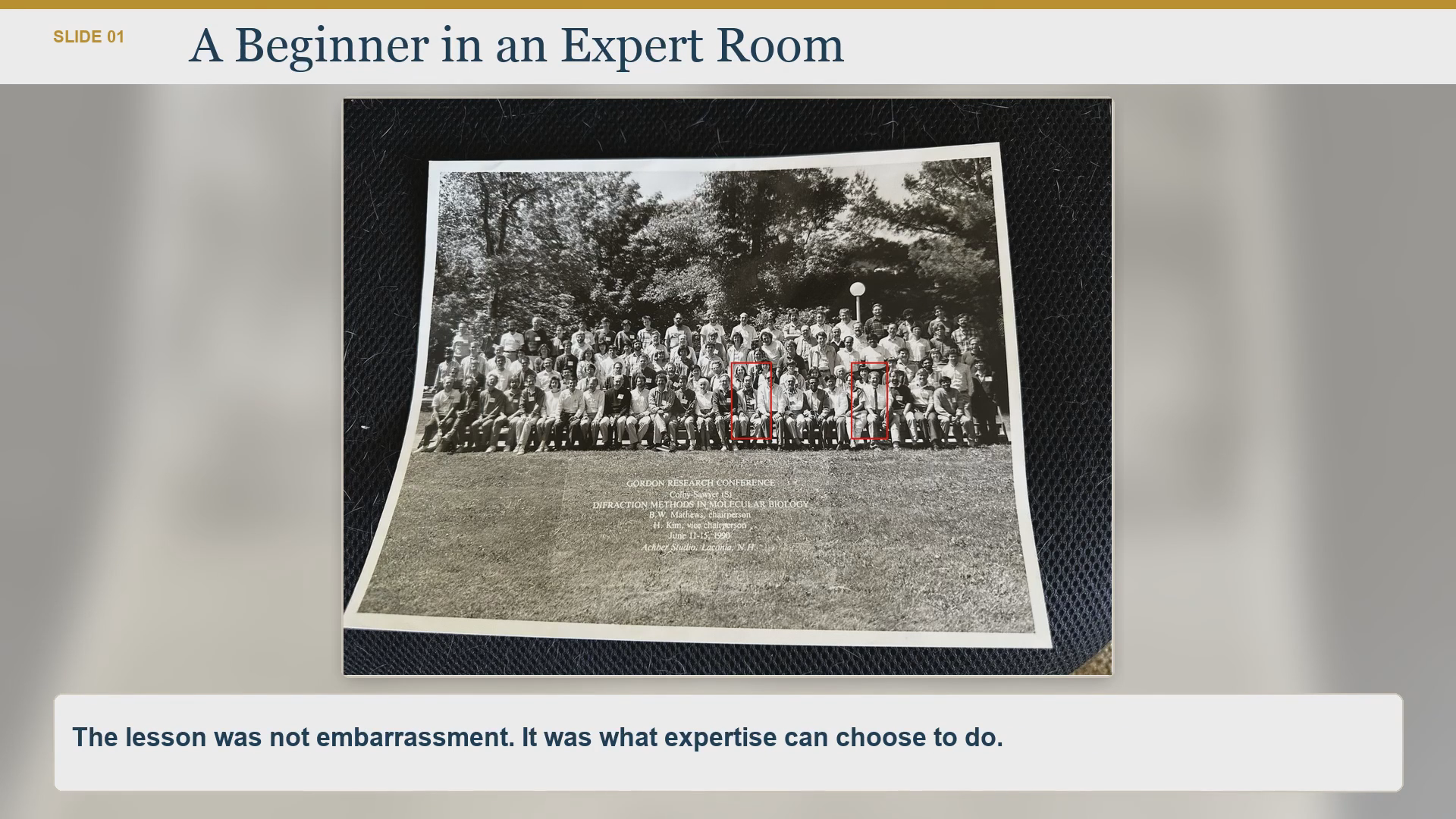
AI for Everyone opens in a lecture room in 1990, where a young Steven Muskal presents neural-network work and hears the sentence that closes doors: that is no big deal, we knew that decades ago. Sung-Hou Kim widens the room instead of piling on, and that choice becomes the essay's spine - expertise can humiliate the next generation, or it can help it keep going. Decades later, as AI takes off, Steve catches the same dismissive line forming in his own mouth and resolves to hold the door open instead.
What makes that invitation real is that the tools now build themselves in plain English. Steve describes shipping real products - Toast Our Friend, AI-Dad, Image Explorer, a patient CT viewer, Food Health - by saying what he wanted and letting the system build it. He turns the fear of being replaced into a better question, which parts of the work should no longer consume a life, and argues the durable edge stays human: fresh, honest, original content is the scarce resource now that models have nearly drained the web's supply, so content, not compute, makes kings.
From there the piece widens to where the race is actually won. Frontier models spread too fast through open weights to stay ahead, so deployment wins, and nations win it with millions of ordinary people turning what they know into working software - the way a medical student's four years of flashcards became Study with Hannah in a single day. If you can measure it, you can monetize it. Steve closes with four moves anyone can make now that the cost of building has collapsed: use it, share it, preserve it, and build it - choosing to be the voice that says come join the party.
AI DemocratizationNatural-Language CodingAI LiteracyNo-CodeCompetitive AdvantageHuman Flourishing
That Go There
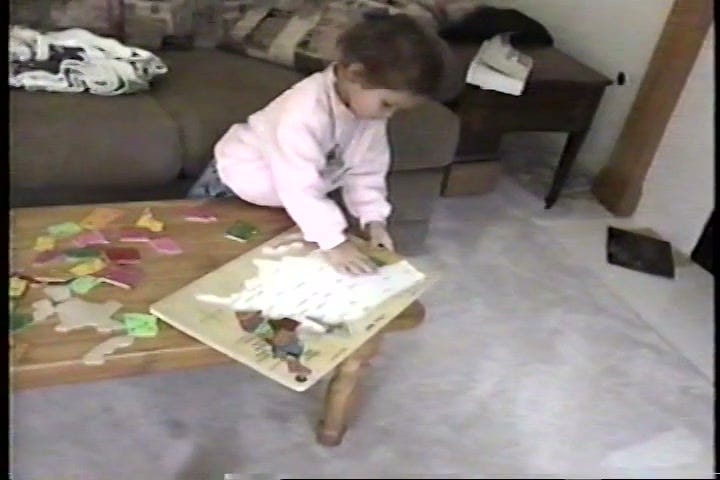
That Go There starts with a phone call about an old tape: Steve's older daughter at two and a half, on the floor with a wooden puzzle of the United States, setting every state in its exact spot and naming the capitals in the small serious voice kids use when they already know they are right. She could not do it today. Neither could he. The tape still can - thirty-some years later, press play and it all comes back.
That gap, between what a mind lets go of and what a piece of media holds onto, becomes a practical argument about memory preservation. The tape survived five dying formats only because someone kept moving it forward. The Library of Alexandria in your garage does not announce when it starts to fade: find the tape, the drive, the format nobody has opened in a decade, and move it somewhere that survives the next format change - then celebrate the people on it while they can still watch.
Memory PreservationDigital ArchivingFormat ObsolescenceHome VideoFamily LegacyToast Our Friend

Study with Hannah
Study with Hannah starts at a kitchen table, where Steve learns his daughter has quietly built a personal knowledge base of more than 62,000 medical study cards, backed by tens of thousands of her own annotated histology slides, radiographs, and diagrams. It is the residue of two associate degrees earned before she could vote, a psychology bachelor's, four of six years at Semmelweis University in Budapest, and a USMLE Step 1 pass well ahead of her class. Her classmates had been using all of it for free.
In about a day that conversation became StudyWithHannah.com: keyword search across her notes, semantic image search over the slide archive, and a conversational AI tutor that quizzes from her own cards and cites them instead of generic textbook filler. The essay widens from there. A stock-photo site still licenses a newspaper photo of Hannah at four years old, taken at a library event two decades ago, without her consent or a cent. Education is already a market, and students are perpetually the customer and never the seller. If schools can monetize the process of educating students, why can't the student who did the distilling be the one at the counter?
Study with HannahMedical EducationUSMLEStudent Data OwnershipAI TutorSemantic Image Search
Universities Built the Bomb. Now Build This.
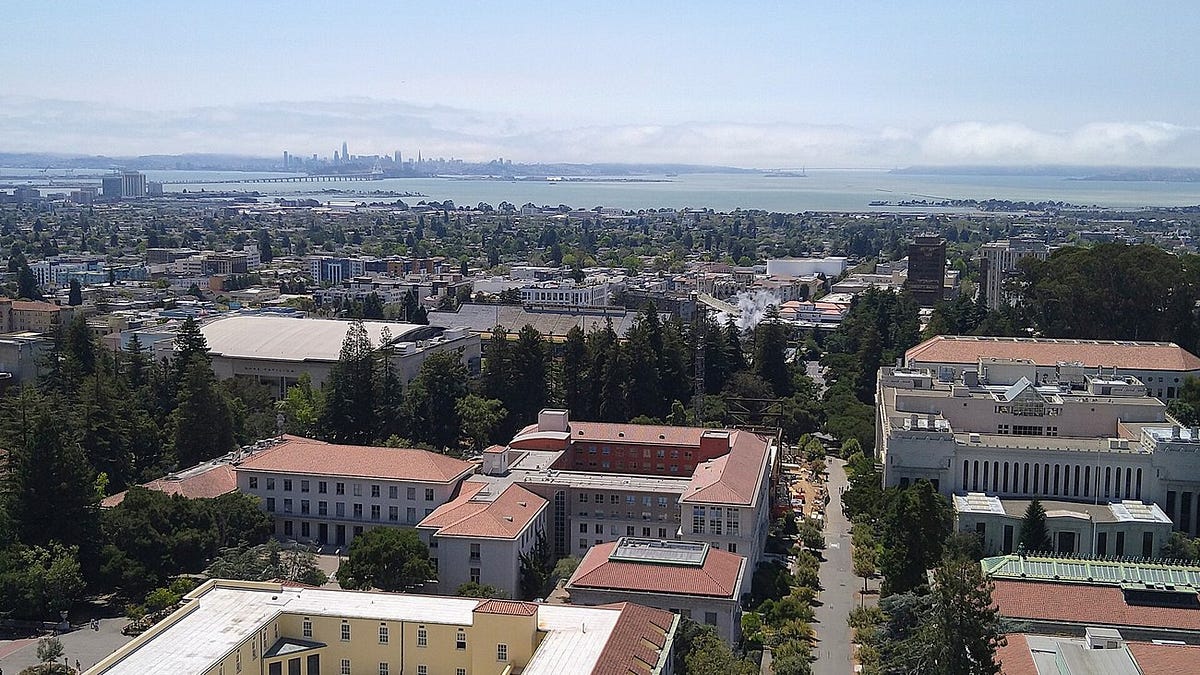
Universities Built the Bomb. Now Build This asks whether elite research universities will treat AI as a threat to scarce degrees or as the next infrastructure for public knowledge. Starting from a conversation with Sung-Hou Kim, the essay argues that Berkeley and its peers can build institution-specific AI knowledge systems from their own research, courses, libraries, and faculty expertise.
The piece is both proposal and historical challenge: use RAG, citations, privacy boundaries, licensing, and faculty incentives to make university knowledge interactive and accountable. Berkeley's cyclotron, plutonium chemistry, and Oppenheimer network become the frame for a new question: who will build the civic infrastructure for intelligence?
University AIRAGBerkeleyKnowledge SystemsHigher Education

Toast Our Friend
Toast Our Friend begins with a thought from Julie's celebration of life: the best stories often arrive too late for the person to hear them. The essay follows Scott Miller, Mike Szwajkowski, Steve Cooper, Tom Shearer, Sung-Hou Kim, and AI-Steve to show how a grief-born tool became a celebration engine for people who are still here.
The piece turns that grief-born insight into a practical invitation: create a circle, collect video toasts, photos, humor, gratitude, and memory, and let the person feel the force of the relationships around them now. The urgent question is simple: who shaped you, and have you told them?
Celebration EngineDigital LegacyStorytellingToast CirclesAI-Steve

Built in One Afternoon, Worth $100M: Steven Muskal on Traction with Lloyed Lobo
Steve joins Lloyed Lobo on Traction for a wide-ranging conversation that starts with early neural networks for protein structure prediction and moves into AI drug discovery, AI-Steve, AI-Dad, Food Health, and the practical limits of any model when human judgment still matters.
The episode also turns personal: wearables, HRV, CGMs, sleep, recovery, cold exposure, stress, and N-of-1 experimentation. The core point is that data becomes useful only when it is personal, longitudinal, and interpreted with enough calm to avoid turning optimization into another source of cortisol.
Traction PodcastLloyed LoboAI Drug DiscoveryFood HealthN-of-1 HealthWearablesCommunity
Same Lab, Different Decades: How Two Berkeley Scientists See the Future of Drug Discovery
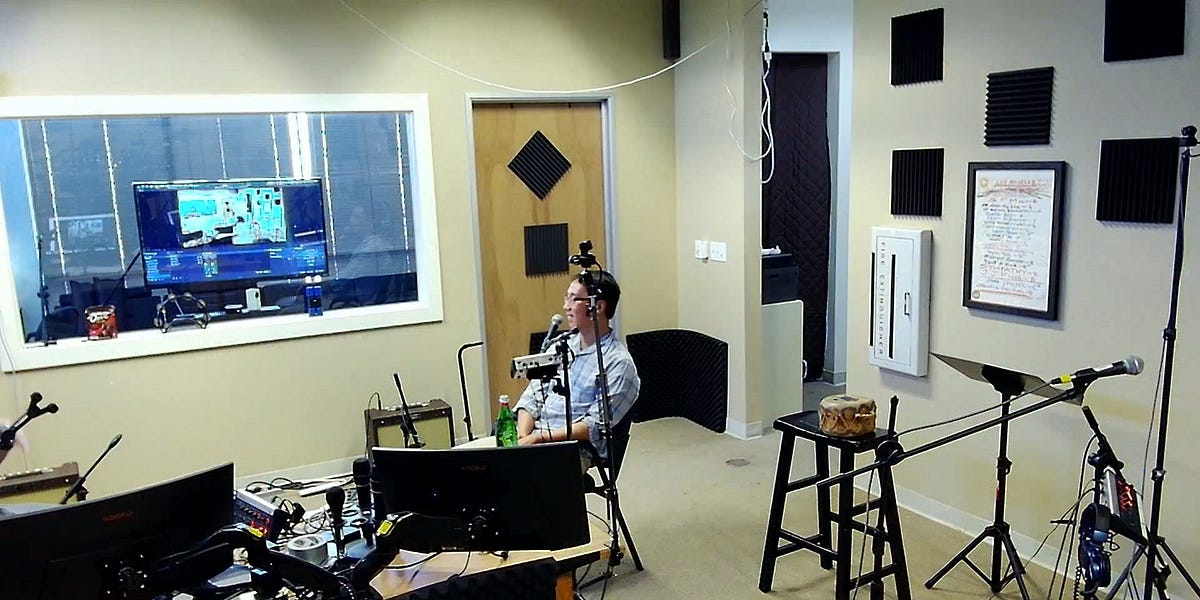
Same Lab, Different Decades follows Steven Muskal and Jonas Lee through two eras of the Sung-Hou Kim Lab at UC Berkeley and into the future of drug discovery. The essay connects structural biology, membrane proteins, GPCRs, ABC transporters, AlphaFold, RF diffusion, proteomics, and AI model limits to a practical thesis: algorithms only become powerful when they have high-quality scientific content. Jonas's path through Berkeley, Caltech, Amgen, Janssen, and Encodia opens into larger questions about broken academic science, pharma redundancy, China biotech speed, open-source data sharing, prevention, and how scientific talent should be deployed.
Jonas LeeSung-Hou Kim LabStructural BiologyAI Drug DiscoveryAlphaFoldProteomicsChina BiotechOpen Source Pharma
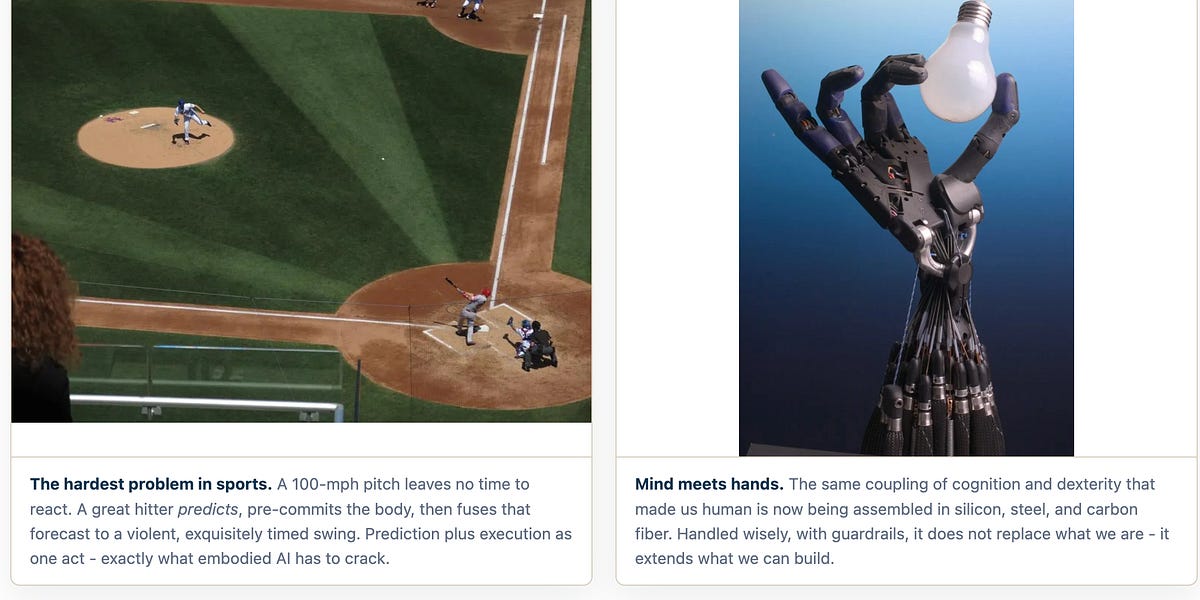
The Rise of the Machine
The Rise of the Machine argues that language models were only AI's first act. The next frontier is physical intelligence: machines that unite cognition with dexterity, sensors, balance, energy discipline, and real-world feedback. Steve frames the global race as America's software and mind bet versus China's hardware and hands bet, then pushes past the contest: neither side wins without coupling prediction to action. From the evolution of the human hand and cortex to baseball's split-second forward model, autonomous vehicles, warehouse robotics, humanoid hands, and the neglected constraint of lightness, the essay asks what it takes for AI to move safely and usefully among us. It closes on the human question: how to plan for disruption with training, guardrails, and on-ramps rather than being surprised by the machines already stepping into the room.
Physical AIEmbodied IntelligenceRoboticsHumanoid RobotsAI Automation

Content Makes Kings
Content Makes Kings argues that the next scarce resource in AI is not more synthetic text, but fresh, trustworthy human-generated work. Steve connects model collapse, GIGO, overfitting, and data hygiene to lessons from neural networks, drug discovery, autonomous driving, and machine translation: models only get as good as the data they ingest. The essay reframes writers, researchers, domain experts, and creators as future kingmakers whose verified voice, expertise, and relationship to reality may become licensable training data. From simulation failures to sensor-rich autonomous vehicle data and patent-document translation corpora, the point is practical: quality training data, not sheer volume, is what keeps AI grounded.
AI Training DataModel CollapseGIGOData HygieneHuman ContentContent LicensingCreator Economy

Your Kitchen Is a Pharmacy. Here's the Proof.
Your Kitchen Is a Pharmacy turns food as medicine into a computational chemistry problem. Starting with a high pharmacophore similarity between Pravastatin and Ganoderic acid from Reishi mushrooms, Steve explains how Drug-to-Table uses QSAR, PharmPrint-style 3D pharmacophore fingerprints, and molecular feature geometry to find non-obvious natural compounds that may resemble known drug biology. The essay is a hypothesis engine, not medical advice: it shows how pharmaceutical-grade tools can be pointed at food, spices, mushrooms, and traditional remedies to generate testable ideas about molecular nutrition. It also connects that science to Food Health Scan: logging meals, estimating nutrition from photos and notes, syncing health data, and looking for personal correlations over time.
Drug-to-TableFood as MedicinePharmacophore SimilarityQSARPharmPrintPravastatinGanoderic AcidReishiFood Health Scan

The Birth of AI Steve: Skating to Where the Puck Is Going
In 1991, Steve's PhD thesis predicted features of protein structure with computer-simulated neural networks - thirty-three years before AlphaFold's Nobel. This essay reframes that arc not as prescience, but as a pattern: dopamine-driven curiosity, pursued at the bleeding edge long enough that the world catches up. The through-line runs from AI-Dad's grief-born experiments in legacy preservation, through Toast Our Friend's celebration of people in real time, through Food Health's belief that food is medicine, to AI-Steve - an operating system for the present, governed by a loop where the AI proposes its own extensions but never executes them without human approval.
AI SteveAlphaFoldNeural NetworksThe Governed LoopDopamine-Driven CuriositySkating to the Puck

Too Big to Fail?
Too Big to Fail? treats AI as cognitive infrastructure rather than a novelty tool. Steve compares the pull of always-on AI assistance to the way Big Food rewired daily appetite: useful, powerful, and easy to overuse. The essay connects dopamine loops, session saturation, successor prompts, cognitive offloading, and gut-instinct atrophy to a practical discipline for AI work. The goal is not abstinence; it is friction, judgment, and enough hormetic stress to keep the human mind sharp while using AI as leverage.
AI InfrastructureDopamine ArchitectureCognitive AtrophyHormetic StressToo Big to Fail

The Metabolic Crisis Is Not a News Story
The Metabolic Crisis Is Not a News Story argues that metabolic dysfunction is not an abstract public-health headline; it is visible in neighbors, friends, families, and often ourselves. Roughly 88-93% of American adults carry at least one metabolic risk factor, yet daily signs of glucose dysregulation have been normalized. Steve frames continuous glucose monitors, food logging, and personal health data as the practical way to make hidden feedback visible. The essay then connects individual measurement to social-network effects, making the case that reversal scales when awareness, habits, and data move through communities.
Metabolic HealthGlucose TrackingCGM TechnologySocial NetworksLifestyle Data

AI Steve II: The Governed Loop
AI Steve II explains the architecture of a personal AI that can identify useful next capabilities, propose extensions, and still wait for human approval before acting. Steve uses the governed loop to separate self-extension from autonomy: the AI can suggest, organize, and amplify, but oversight remains explicit. The essay ties RAG, personal memory, productivity, and safety architecture to a human question raised by a 91-year-old at a hillside spa: what should amplified time be for? Its answer is presence, deeper engagement, and purposeful work.
AI GovernanceRAGHuman-in-the-LoopPersonal AIAI Safety

The Fire This Time
The Fire This Time argues that AI is not just another communications technology; it is a general-purpose force closer to fire. Steve uses James Baldwin's framing to describe a civilization-scale shift in which intelligence becomes broadly accessible beyond elite institutions, credentials, geography, and pedigree. The essay is optimistic without being naive: democratized intelligence can help brilliant minds contribute to hard problems, but it also demands judgment, stewardship, and a broader sense of who gets to build the future.
AI DemocratizationIntelligence as FireInstitutional GatekeepingCivilizational Shift

Are We There Yet?
Are We There Yet? is a field note from the moment AI gives individuals and small teams the operating leverage once reserved for large organizations. Steve argues that the surprising part is no longer capability: code, research, writing, design, and coordination can now be amplified by agentic tools. The harder question is judgment. When one person can act like an army, taste, ethics, prioritization, and restraint become the real scarce resources.
Agentic AIAI JudgmentOne-Person ArmySolo Builders

Food Is Medicine. But First It Has to Become Data.
Food Is Medicine. But First It Has to Become Data reframes nutrition as an information problem. Good advice cannot close the loop unless meals are captured in a form that can be reviewed, compared, and linked to biology. Steve connects meal photos, food logs, nutrition estimates, glucose response, sleep, recovery, and wearable health data to the practical idea behind Food Health Scan. The essay argues for N-of-1 feedback: turn daily eating into structured observations so food can become a real health signal rather than a vague aspiration.
Food as MedicineNutrition DataN-of-1 HealthHealth AI

We've Already Reached AGI. The Market Just Hasn't Admitted It Yet.
We've Already Reached AGI argues that the technical surprise may already be behind us. Steve frames AGI as a Zero to One threshold: once general capability exists in usable form, markets start pricing One to N - deployment, distribution, integration, trust, and business-model execution. The essay shifts attention from abstract benchmarks to the practical economics of getting intelligence into workflows, institutions, and daily decisions.
AGIZero to OneAI DeploymentMarket Timing

The N-of-1 Health Stack
The N-of-1 Health Stack asks why so much wearable and Apple Health data feels busy but not useful. Steve argues that population averages and normal ranges are helpful for screening, but too blunt for understanding one person over time. The real signal lives in personal baselines, trajectories, variance, and context: sleep, movement, heart rate, temperature, oxygen saturation, labs, workouts, recovery, meals, and symptoms viewed as a longitudinal system. The stack is a blueprint for turning scattered dashboards into practical health intelligence: detect what changed, connect behavior to response, look for lagged correlations, and build feedback loops that help a person learn their own biology rather than compare themselves to an average.
N-of-1 HealthApple HealthWearablesPersonal BaselinesLongitudinal DataHealth AnalyticsShareHealth

AI-Steve Deep Dive
AI-Steve Deep Dive explores what happens when a personal AI becomes an extension of intellect rather than a generic chatbot. The essay frames AI-Steve as a research, coaching, and workflow companion built around memory, retrieval, context, and reasoning. It connects personal knowledge systems, RAG architecture, and human-in-the-loop oversight to a practical question: how can AI help a person think, remember, decide, and create with more continuity?

Curiosity Is the Only Sustainable Edge
Curiosity Is the Only Sustainable Edge follows Steve and Moritz "Moe" Koeppenkastrop-Lueker in a conversation that treats curiosity as a durable advantage, not a personality quirk. The episode looks at how asking better questions shapes science, startups, creative work, and reinvention. It is a walk-the-talk discussion about staying open, learning in public, and using curiosity as the engine for a more adaptive life.

When Constraint Becomes a Superpower
When Constraint Becomes a Superpower is a conversation with Gibson Hanks about how limits can become creative leverage. The episode looks at constraints not as obstacles to avoid, but as pressure that can sharpen problem solving, resilience, adaptation, and execution. It fits the Renaissance Circle theme of turning lived experience into practical insight for building, leading, and staying useful.

Christmas Lights, The Beetle and Recursion
Christmas Lights, The Beetle and Recursion uses everyday perception as an entry point into a deeper question about intelligence. Steve reflects on recursion, pattern recognition, and the way meaning emerges between observer and signal rather than inside either one alone. The essay connects AI, cognition, perception, and lived metaphor into a compact meditation on why intelligence often lives in the in-between.

AI-Dad: Preserving Legacy Through Conversational Intelligence
AI-Dad is both a technical project and a family story. Steve describes building an AI that can carry forward a father's wisdom, legal expertise, stories, voice, and love through conversational access to family archives. The essay connects RAG, voice technology, memory, grief, and intergenerational storytelling to a practical question: how can AI help preserve what would otherwise disappear when a person is gone?

Community is the Moat
Community is the Moat features Lloyed Lobo, cofounder of Boast.ai and Traction, in a conversation about building movements rather than only companies. The episode connects startup durability, community design, belonging, health, movement, food, and sleep. Its through-line is that a real community can become a moat because it creates trust, identity, and repeated participation that marketing alone cannot buy.

Behind the Bar, Ahead of the Curve
Behind the Bar, Ahead of the Curve turns a hospitality conversation with Dakota and Vlad into a study of people skills. The episode explores hustle, reading a room, service instincts, customer signal, timing, and the practical intelligence required behind the bar. It connects hospitality to entrepreneurship and machine-learning language by showing how skilled humans constantly classify, predict, adapt, and make guests feel seen.

Grit, Curiosity & Building What Matters
Grit, Curiosity & Building What Matters follows Megan Phillips and Fernanda Campos through biomedical roots, bold ideas, and the lived work of turning expertise into something useful. The conversation centers on grit, curiosity, career pivots, and the discipline of building what matters rather than what only looks impressive. It is a practical episode for scientists, founders, and builders translating knowledge into impact.

Glucose, Grit & Breaking Glass Ceilings
Glucose, Grit & Breaking Glass Ceilings features Christy Shearer on personal passion, professional pivots, and the hard-won expertise behind medical devices. The conversation connects glucose management, patient-centered technology, career resilience, and leadership in technical fields. It is both a health-tech discussion and a story about persistence, reinvention, and making complex tools work for real people.

Music, Security, and Meaning
Music, Security, and Meaning brings Steve together with Dom Mather for a conversation spanning cybersecurity, musicianship, identity, heritage, and balance. The episode looks at how technical discipline and creative practice can shape one another, and how music can remain a grounding force amid high-stakes security work. It is a Renaissance Circle blend of craft, safety, meaning, and human rhythm.

Science, Startups, and Serendipity
Science, Startups, and Serendipity is a raw session with Devon Cayer about the unexpected paths that connect curiosity, science, entrepreneurship, and opportunity. The conversation leans into the messy middle of building: experiments, chance encounters, practical pivots, and the discipline to notice when a side path becomes the path. It adds texture to the founder journey beyond polished origin stories.

Homeownership, Healthcare, and AI
Homeownership, Healthcare, and AI asks whether the next generation will be better off, using family conversation as the frame for larger economic and technological questions. The card sits at the intersection of generational opportunity, housing affordability, health care, and AI's uncertain effect on work and security. It is less a prediction than a cross-generational check-in on what progress should actually mean.

Will Writers Hold the Key to AI?
Will Writers Hold the Key to AI? explores artificial intelligence, education, and the future of expertise through the lens of writing. Steve asks whether writers, teachers, and domain experts hold a special role in an AI world because they preserve context, judgment, structure, and original thinking. The piece connects authorship to learning, critical reasoning, and the training signals that shape intelligent systems.

Inside the Story: Pro Tips from Scott Miller
Inside the Story features Scott Miller on the craft of storytelling, reporting, and drawing life lessons from a career around professional baseball. The conversation focuses on listening, structure, timing, and the details that turn facts into narrative. It is a useful card for anyone interested in communication, journalism, sports writing, or the human discipline behind a good story.

Healing through music
Healing through music brings Steve and Jerome Dawson into a conversation about music as a force for healing, uplift, memory, and connection. The episode treats performance as more than entertainment: songs can organize emotion, create community, and help people move through difficult seasons. It fits the broader Renaissance Circle thread of health, creativity, and the art of feeling good.

Two founders recount their unexpected career paths
Two founders recount their unexpected career paths explores how skills can be repurposed when life or opportunity points in a new direction. The conversation focuses on reinvention, entrepreneurship, and the practical confidence that comes from noticing what transfers across fields. It is a useful episode for people navigating career pivots, founder uncertainty, or second-act professional identity.

A Quarter Century+: Talking with Neil Peretz
A Quarter Century+ captures a long-arc conversation with Neil Peretz about entrepreneurship, law, friendship, and the networks that matter at different stages of life. Steve frames the value of entrepreneurial friends, lawyer friends, and doctor friends as a practical map of adulthood. The episode is part career reflection, part relationship audit, and part reminder that durable friendships can become real infrastructure.

Do You Have Grit?
Do You Have Grit? starts from a deceptively simple family question: what did you do as a kid that was strange? From there, the piece turns childhood oddities into clues about persistence, curiosity, resilience, and identity. It is a personal reflection on the early behaviors that can look unusual in the moment but later reveal the raw material for grit.

Father-Daughter Face-Off (part two): Medical Training Overseas
Father-Daughter Face-Off part two moves from family memory into medical training overseas. The conversation uses "OG" Great-Grandma Helen as an anchor for a broader discussion about lineage, education, ambition, and the different routes people take into medicine. It keeps the father-daughter format while widening the lens to global training, family influence, and inherited drive.

Father-Daughter Face-Off (part one): Comparing Gen-X and Gen-Z
Father-Daughter Face-Off part one compares Gen-X and Gen-Z through a candid family conversation. Steve and his daughter use the generational contrast to explore communication, expectations, technology, work, education, and the different pressures each cohort takes for granted. It is a personal entry point into a wider question: what changes, and what stays human, across generations?

Optimizing Sleep: Measure to Manage
Optimizing Sleep: Measure to Manage treats sleep as a practical health system that improves when it is measured, observed, and iterated. Steve frames the "room for improvement" as an invitation to use tracking, routines, environment, and recovery signals to learn what actually changes sleep quality. It connects personal experimentation with the broader N-of-1 principle: better data enables better habits.

My Story: A Mitochondrial Journey
My Story: A Mitochondrial Journey uses ancestry and mitochondrial inheritance as a way into health, family, biology, and gratitude. Steve reflects on the maternal line, the ancestors who carried that biological thread forward, and what it means to see personal health in the context of deep continuity. The piece blends science with memory, identity, and respect for the people whose lives made ours possible.

Sleep Optimization Go-To's
Sleep Optimization Go-To's gathers the practical tools, routines, and experiments Steve uses to improve sleep and recovery. Rather than treating sleep as a single trick, the card points to a living stack: environment, timing, habits, tracking, and small interventions that can be tested over time. It pairs well with the measure-to-manage mindset behind the broader health content.
Welcome to Renaissance Circle
Welcome to Renaissance Circle introduces the publication as a no-hidden-agenda home for health, music, entrepreneurship, science, and personal experimentation. Steve sets the tone for a monthly pulse that mixes practical well-being tips, project updates, conversations, and creative work. It is the starting point for the site's broader theme: learn broadly, build honestly, and keep finding the art of feeling good.